Classic Pasta Carbonara
Jump to RecipeThis post may contain affiliate links. If you make a purchase through one of these links, we may earn a small commission at no extra cost to you. Learn more.
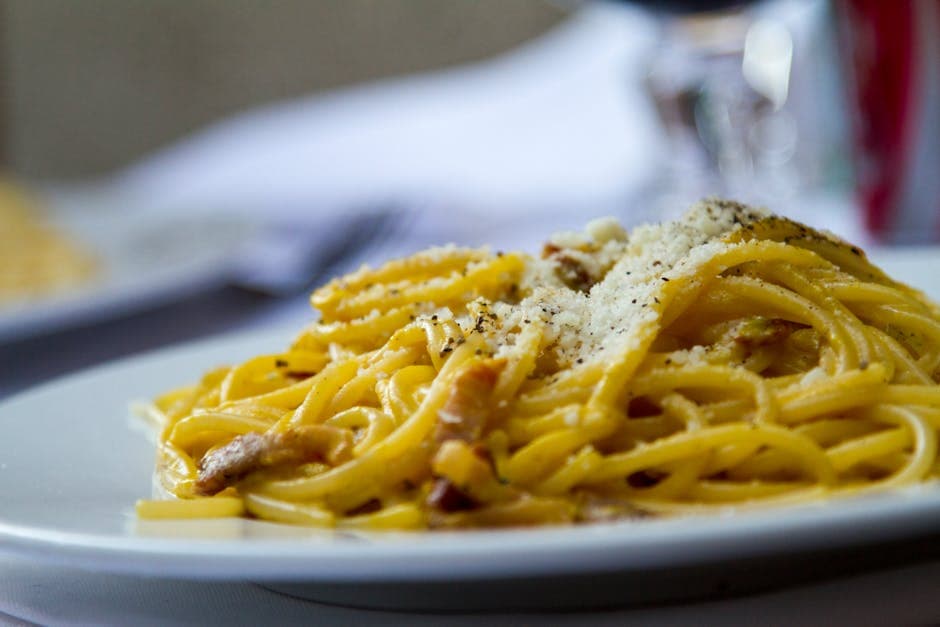
Carbonara is one of those Roman pasta dishes that looks impressive on the plate but takes less than 30 minutes start to finish. Just five ingredients — pasta, guanciale, eggs, pecorino, and black pepper — and you have a dinner that feels restaurant-worthy on any weeknight.
The key ingredient is guanciale, cured pork cheek, which has a richer and slightly sweeter fat than bacon or pancetta. It renders down into golden, crispy pieces that carry the whole dish. It’s worth seeking out at an Italian deli or deli counter. If you can’t find it, pancetta is the best substitute — more on that in the notes.
The egg cream is where most people go wrong. The trick is to pull the pan off the heat completely before you add it, then stir quickly. The residual warmth from the pasta does the cooking for you — slowly and gently. No scrambled eggs, just a silky, glossy sauce that coats every strand. If you enjoy comforting Italian pasta dishes, you might also like our Cacio e Pepe or Pasta Amatriciana.
Ingredients
- 500g pasta (rigatoni or spaghetti)
- 100g guanciale, cut into small cubes
- 2 whole eggs
- 3 egg yolks
- 200g pecorino romano or parmesan, finely grated — plus extra to serve
- Freshly ground black pepper, to taste
How to Make Classic Pasta Carbonara
- Render the guanciale. Place the guanciale cubes into a cold frying pan — no oil or butter needed. Set over a medium heat and cook for 8–10 minutes, stirring occasionally, until the pieces are deeply golden and crispy. If there is a lot of excess fat in the pan, drain some off, leaving just enough to coat the pasta.
- Make the egg cream. While the guanciale cooks, whisk together the 2 whole eggs and 3 yolks in a bowl. Add the grated pecorino and a generous amount of freshly ground black pepper, then whisk until the mixture is thick and pale. If it feels too stiff, add a small splash of sparkling water to loosen it. If it’s too runny, whisk in a little more grated cheese.
- Cook and drain the pasta. Cook the pasta in well-salted boiling water according to the packet instructions until al dente. Before draining, scoop out a mugful of pasta cooking water and set it aside, then drain the pasta.
- Toss the pasta with guanciale. Add the drained pasta straight into the pan with the guanciale. Toss well over a medium heat for 1–2 minutes so the pasta absorbs the flavour and picks up a little colour from the rendered fat.
- Add the egg cream and serve. Remove the pan from the heat completely — this is essential to avoid scrambled eggs. Pour the egg and cheese mixture over the pasta and toss quickly and continuously, adding splashes of the reserved pasta water as needed, until you have a glossy, creamy sauce that coats every strand. Serve immediately with extra grated pecorino and black pepper.
Tips and Notes
Storage: Carbonara does not keep well — the egg sauce becomes dry and grainy when reheated. It’s best eaten straight away. If you must store it, keep in the fridge for up to 1 day and reheat very gently over a low heat with a splash of water, stirring continuously.
Swap: If you can’t find guanciale, use unsmoked pancetta. Avoid regular bacon — the smoky flavour changes the character of the dish.
Tip: The pasta cooking water is your secret weapon. The starch it contains helps emulsify the egg cream into a proper silky sauce rather than a clumpy scramble.
Frequently Asked Questions
Can I use bacon instead of guanciale?
You can, but the flavour will be noticeably different. Bacon is smoked, which adds a flavour note that isn’t traditional in carbonara. If guanciale isn’t available, unsmoked pancetta is the closest substitute — it has a similar fat content and a mild, cured flavour.
Why does my carbonara turn into scrambled eggs?
The eggs scramble when the pan is too hot. Always remove the pan from the heat completely before adding the egg mixture. The residual warmth from the pasta is enough to cook the sauce gently. Adding a splash of starchy pasta water also helps the sauce stay loose and creamy.
Do I need cream in carbonara?
No. Authentic carbonara contains no cream. The creamy texture comes entirely from the emulsification of eggs, cheese, and starchy pasta water. Adding cream makes the sauce heavier and masks the flavour of the guanciale and pecorino.
Tips, Storage & Variations
Tips
- Start the guanciale in a cold pan — this lets the fat render slowly and evenly, giving you crispy pieces rather than burnt edges.
- Reserve at least 200ml of pasta water before draining. You’ll need it to loosen the egg cream if the sauce looks too thick once combined.
- The egg mixture must go into the pan off the heat. Even residual warmth from the hot pasta and guanciale fat is enough to cook it gently into a sauce; any direct heat scrambles the eggs instantly.
- Work quickly once you’ve drained the pasta — toss it with the guanciale and fat first, then add the egg mixture whilst still hot and stir constantly for 30 seconds to emulsify.
Storage
- Carbonara is best eaten straight away, but leftovers keep in the fridge for up to 2 days in an airtight container.
- Do not freeze — the egg-based sauce separates and becomes grainy.
- To reheat, warm gently in a pan with a splash of water or pasta water over low heat, stirring constantly to recombine the sauce.
Variations
- No guanciale or pancetta? Use crispy bacon, though the flavour will be less rich.
- Vegetarian version: replace the meat with 150g crispy sage and butter, fried until golden.
- Serve with a sharp green salad and crusty bread to cut through the richness.